%20--%3e%3cdefs%3e%3cstyle%3e%20.st0%20{%20fill:%20%23ff1230;%20}%20.st1%20{%20fill:%20%23fff;%20}%20%3c/style%3e%3c/defs%3e%3cpath%20class='st0'%20d='M49.77,34.93l3.47-5.3,23.2-5.86,4.03-6.07-23.14,5.83,3.55-5.33,23.17-5.84,3.96-6.05-23.07,5.8,3.59-5.52-23.16,5.83,3.68-5.68-19.8,4.98c-2.49.63-4.65,2.16-6.07,4.3l-1.81,2.75,20-5.03c.7-.18,1.49-.1,1.75.21.21.25.09,1.12-.24,1.61l-1.85,2.7-19.34,4.87c-2.48.62-4.64,2.15-6.06,4.29l-1.82,2.75,20.12-5.04c.7-.18,1.53.11,1.64.48.09.31-.06,1.12-.4,1.6l-1.79,2.51-19.21,4.82c-2.51.63-4.69,2.19-6.11,4.36l-1.75,2.69,20.19-5.08c1.67-.25,1.96.77,1.1,2.08l-1.9,2.89,19.51-4.94c1.49-.38,2.88,0,1.87,1.62l-1.88,3.01,24.65-6.19,3.01-5.82-23.07,5.79ZM60.94,13.54c.53-.13,1.35.11,1.52.37.19.28-.02,1.14-.37,1.66l-1.73,2.56-22.57,5.67,3.51-5.31,19.64-4.95ZM30.19,35.24l3.49-5.33,19.75-4.95c1.34-.34,1.92.7,1.23,1.76l-1.83,2.83-22.65,5.7Z'/%3e%3cpath%20class='st1'%20d='M236.44,40.24l22.56-33.95h10.5l-22.56,33.95h-10.5Z'/%3e%3cpath%20class='st1'%20d='M368.54,15.18l5.9-8.88h-52.48l-5.64,8.49-3.45,5.19-5.01,7.54h0s40.4,0,40.4,0l-2.82,4.24h-72.13c-2.23,0-3.07-1.46-1.87-3.27l9.11-13.71h29.5l5.95-8.49h-40.31l-5.64,8.49-9.61,14.46c-.36.55-.67,1.08-.92,1.61-.15.31-.28.61-.39.9-1.52,4.06.3,7.25,4.69,8.2.48.1.99.18,1.54.23.44.04.9.06,1.38.06h85.14l8.46-12.73,5.24-7.89h-40.45l2.95-4.44h40.45Z'/%3e%3cpath%20class='st1'%20d='M198.16,6.32c-.19,0-.37-.03-.56-.03h-60.45l-37.03,26.63h-19.71l18.01-26.63h-10.5l-17.48,26.31c-2.17,3.27.17,7.64,4.09,7.64h28.01l37.22-25.46h6.27l-16.92,25.46h10.51l16.92-25.46h27.83l-.02.04h7.11c1.89.18,2.56,1.55,1.44,3.23l-1.3,1.96c-1.2,1.8-3.98,3.27-6.21,3.27h-25.26l-11.28,16.98h10.5l5.64-8.49h15.69c.48,0,.96-.02,1.45-.06.61-.05,1.22-.12,1.84-.23,5.65-.95,11.72-4.14,15.59-8.2.02-.02.04-.04.06-.06.74-.78,5.18-7.47,5.57-8.39h17.48l-16.94,25.49h10.51l16.94-25.49h14.98l5.65-8.5h-55.64Z'/%3e%3c/svg%3e)
Curitiba: How to Drive the Mixed High/Low-Speed Sector
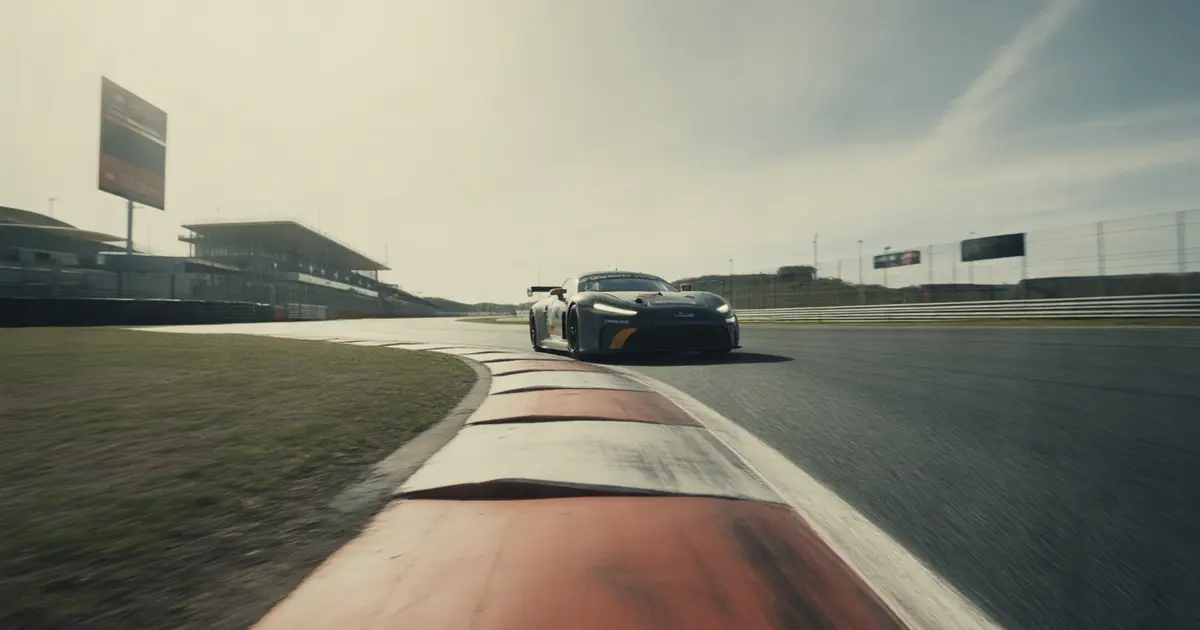
Curitiba's mixed sector punishes drivers who treat both parts at the same pace. See where time leaks and how to train the transition between the fast stretch and the technical infield.
Curitiba's mixed sector is driven in two separate rhythms, not one: you come in fast off the high-speed stretch and need to slow down the cadence of your hands and feet the moment the track tightens into the technical infield. Drivers who try to carry the same momentum through both sections lose time on both ends — they lock the front end too early entering the infield and crawl out of the slow corners from over-correcting.
This isn't just a feeling — it's a pattern that shows up in the data: a bigger speed drop than necessary right after the last fast apex, followed by an irregular steering angle through the next two or three corners.
Where the Rhythm Breaks
Curitiba's mixed sector sits exactly at the seam between the outer stretch, where the car is still carrying energy from the fast corners, and the inner infield, with tight corners in quick succession and little room to correct a mistake. It's at this seam that the driver decides, in under a second, to switch driving styles.
Getting this point wrong doesn't just cost you the next corner — it costs you the whole transition. The most common symptom is a late brake into the first corner of the infield, driven by the late-braking habit that worked well back in the fast stretch.
The Recurring Mistake: Carrying the Wrong Momentum
The classic mistake is treating the entry to the infield like just another fast corner. The driver lifts off the throttle late, brakes with the same aggression as the previous stretch, and arrives at the first apex of the infield still carrying heavy brake load, requiring more steering input to compensate.
The result is a chain reaction: more steering input creates more under- or oversteer, which demands correction, which delays getting back on the throttle at exit. One poorly handled corner contaminates the next two or three, because the infield gives you no room to reorganize your line halfway through.
The mixed sector isn't won in its fastest corner: it's won in the first slow corner, where the driver decides to switch rhythm in time or too late.
Setup: The Compromise That Isn't Free
You can't set the car up just for the fast stretch or just for the infield — Curitiba demands both in the same setup, and any adjustment pulled toward one side costs you on the other. Before touching anything, it's worth reviewing which four setup adjustments to try first to isolate what actually changes behavior here.
- Rear wing: more downforce helps stabilize the fast corners of the outer stretch, but makes the car slower to rotate in the infield, where speed is low and downforce matters less.
- Front anti-roll bar: a stiffer bar improves response in the fast corners, but tends to make the car more nervous under heavy steering input through the infield's tight corners.
- Power differential: more lock helps traction out of the infield's slow corners, but can cause slight understeer exiting the fast corners, where the car is already more loaded.
- Front ride height: fine-tuning here changes entry balance exactly at the transition point, before any bigger change to springs or dampers.
The goal isn't to find the perfect setup for both sections — it doesn't exist. It's finding the point where the loss on each side is small and predictable, and training around it.
What to Check in the Data to Confirm It
Before touching setup, confirm in the data that the problem really is rhythm and not line. Three channels settle this: speed, steering angle, and brake pedal position overlaid exactly at the transition.
If the data curve shows a short brake plateau followed by a high steering spike, the driver is trying to fix with the wheel what should be fixed with the foot. To know where to start looking, it's worth reviewing which three channels to check first in telemetry before any car adjustment.
Comparing the reference lap with your own lap point by point also helps pinpoint exactly which corner is costing the most time in the lap — in the mixed sector, it's usually the first slow corner after the fast stretch, not the tightest one of all.
A Training Plan to Separate the Two Rhythms
Training the entire mixed sector at once mixes both problems together. It's more effective to isolate the transition before running the full lap.
- Isolate the fast stretch on its own and run five laps focusing only on maximizing entry speed into the last apex before the infield.
- Isolate the infield on its own, entering deliberately slow, to feel the rhythm of hands and feet the car asks for there, without contamination from the previous stretch.
- Join both sections and run the transition itself, paying attention only to the point where you lift off the throttle and start braking.
- Compare brake pressure between the isolated lap and the full lap: if the pressure entering the infield changes when coming off the fast stretch, momentum is leaking through.
- Adjust the throttle-lift point a bit earlier with each attempt, until braking into the infield matches in both situations.
This process of breaking the track into small blocks is the same principle used to release the brake in proportion to steering during trail braking: solving the transition in smaller steps before running the whole lap.
How This Changes by Car
The size of the problem depends on how much aerodynamic downforce the car carries in the fast stretch and how much it relies on engine revs to pull out of the infield.
| Car | Mixed Sector Challenge | Key Adjustment |
|---|---|---|
| GT3 | Loss of aerodynamic load entering the infield | Transfer weight before turning the wheel |
| Stock Car | Car weight resists the change of direction | Longer, more progressive braking |
| Open-wheel formula | Overconfidence carried over from the fast corner | Lift off the throttle earlier, before peak load |
A heavier car, like the Stock Car, forgives late braking into the infield less — the weight keeps pushing the car forward even after the driver has already released the brake.
How Laptics Fits Into This Training
After running the plan above, the job is to confirm whether the transition actually improved, not just felt better. The Laptics app records telemetry automatically while you run Automobilista 2 and compares your laps phase by phase, showing exactly how much time each input cost at the entry to the infield.
The Driver DNA helps you see whether the late-braking habit from the fast stretch is really leaking into the infield throughout the session, or only on some laps — which completely changes what to train tomorrow.
Practical Summary
Curitiba's mixed sector is solved by treating both sections as different driving styles, with a clear transition point between them. Isolate the fast stretch, isolate the infield, then join both and check in the data whether braking into the infield changes when it's carried over from the previous stretch. If it does, the gain is right there — not in one more setup tweak.
Frequently asked questions
What is Curitiba's mixed sector in Automobilista 2?
It's the stretch where the fast outer line connects to the tight, technical inner infield, requiring a rhythm change within a few meters.
What's the most common mistake in this sector?
Braking into the infield with the same aggression and timing as the fast stretch, which causes excessive steering input and correction exiting the slow corners.
Is there an ideal setup for the whole mixed sector?
No. It's a compromise between what helps the fast stretch and what helps the infield; the goal is to minimize the loss on both sides, not eliminate it.
How do you know if the problem is rhythm and not line?
Overlay speed, steering angle, and brake pressure at the entry to the infield; a short brake followed by a high steering spike indicates correction, not a bad line.
Do heavier cars suffer more in this type of sector?
Yes, cars like the Stock Car forgive late braking less, because the weight keeps pushing the car forward even after releasing the pedal.
How can you train this transition without running the whole track?
Isolate the fast stretch, then the infield on its own, and only afterward join both, paying attention only to the throttle-lift point.
Does Laptics help confirm whether the transition improved?
Yes, the analysis compares laps phase by phase and shows whether the late-braking habit from the fast stretch keeps leaking into the infield on following laps.
Want to see this in your own telemetry?
Discover Laptics