%20--%3e%3cdefs%3e%3cstyle%3e%20.st0%20{%20fill:%20%23ff1230;%20}%20.st1%20{%20fill:%20%23fff;%20}%20%3c/style%3e%3c/defs%3e%3cpath%20class='st0'%20d='M49.77,34.93l3.47-5.3,23.2-5.86,4.03-6.07-23.14,5.83,3.55-5.33,23.17-5.84,3.96-6.05-23.07,5.8,3.59-5.52-23.16,5.83,3.68-5.68-19.8,4.98c-2.49.63-4.65,2.16-6.07,4.3l-1.81,2.75,20-5.03c.7-.18,1.49-.1,1.75.21.21.25.09,1.12-.24,1.61l-1.85,2.7-19.34,4.87c-2.48.62-4.64,2.15-6.06,4.29l-1.82,2.75,20.12-5.04c.7-.18,1.53.11,1.64.48.09.31-.06,1.12-.4,1.6l-1.79,2.51-19.21,4.82c-2.51.63-4.69,2.19-6.11,4.36l-1.75,2.69,20.19-5.08c1.67-.25,1.96.77,1.1,2.08l-1.9,2.89,19.51-4.94c1.49-.38,2.88,0,1.87,1.62l-1.88,3.01,24.65-6.19,3.01-5.82-23.07,5.79ZM60.94,13.54c.53-.13,1.35.11,1.52.37.19.28-.02,1.14-.37,1.66l-1.73,2.56-22.57,5.67,3.51-5.31,19.64-4.95ZM30.19,35.24l3.49-5.33,19.75-4.95c1.34-.34,1.92.7,1.23,1.76l-1.83,2.83-22.65,5.7Z'/%3e%3cpath%20class='st1'%20d='M236.44,40.24l22.56-33.95h10.5l-22.56,33.95h-10.5Z'/%3e%3cpath%20class='st1'%20d='M368.54,15.18l5.9-8.88h-52.48l-5.64,8.49-3.45,5.19-5.01,7.54h0s40.4,0,40.4,0l-2.82,4.24h-72.13c-2.23,0-3.07-1.46-1.87-3.27l9.11-13.71h29.5l5.95-8.49h-40.31l-5.64,8.49-9.61,14.46c-.36.55-.67,1.08-.92,1.61-.15.31-.28.61-.39.9-1.52,4.06.3,7.25,4.69,8.2.48.1.99.18,1.54.23.44.04.9.06,1.38.06h85.14l8.46-12.73,5.24-7.89h-40.45l2.95-4.44h40.45Z'/%3e%3cpath%20class='st1'%20d='M198.16,6.32c-.19,0-.37-.03-.56-.03h-60.45l-37.03,26.63h-19.71l18.01-26.63h-10.5l-17.48,26.31c-2.17,3.27.17,7.64,4.09,7.64h28.01l37.22-25.46h6.27l-16.92,25.46h10.51l16.92-25.46h27.83l-.02.04h7.11c1.89.18,2.56,1.55,1.44,3.23l-1.3,1.96c-1.2,1.8-3.98,3.27-6.21,3.27h-25.26l-11.28,16.98h10.5l5.64-8.49h15.69c.48,0,.96-.02,1.45-.06.61-.05,1.22-.12,1.84-.23,5.65-.95,11.72-4.14,15.59-8.2.02-.02.04-.04.06-.06.74-.78,5.18-7.47,5.57-8.39h17.48l-16.94,25.49h10.51l16.94-25.49h14.98l5.65-8.5h-55.64Z'/%3e%3c/svg%3e)
Why Your Second Fast Lap Never Comes
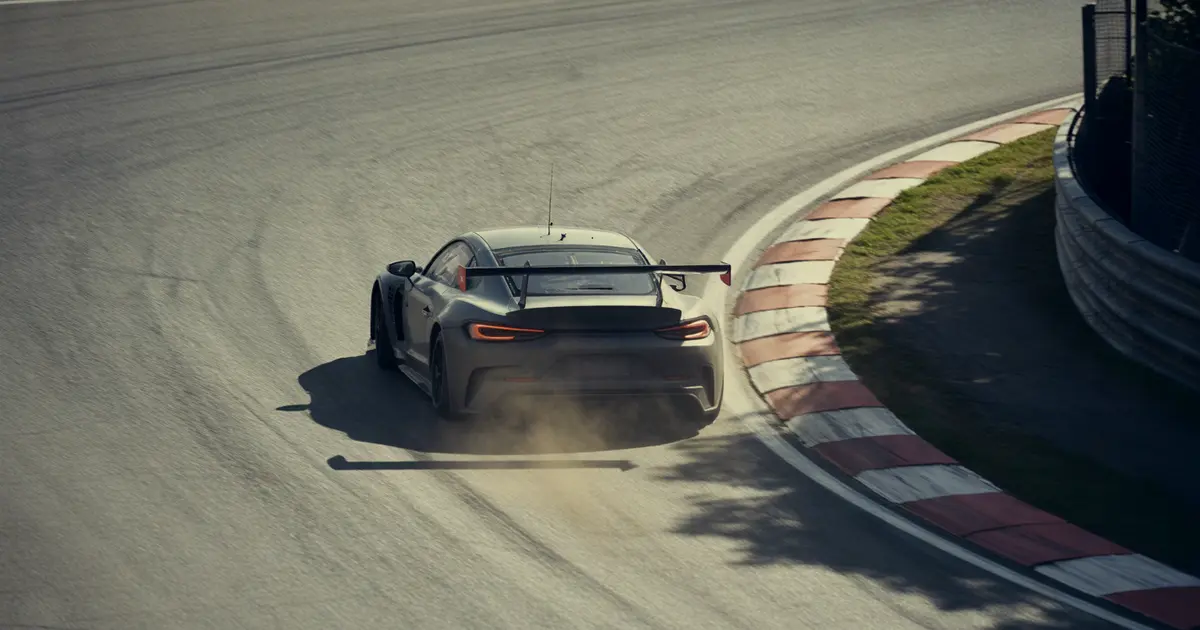
Your fast lap doesn’t repeat because it was born from an isolated move, a clean track, or fresh tires — and each of those calls for a different check in your data.
Your second fast lap doesn't come because the first one wasn't the product of a method — it was a favorable accident: a slightly later braking point, a corner exit that worked out thanks to a lucky bite of grip, a gap in traffic that opened up the whole track. Repeating it means knowing which of these three things actually happened — and that never shows up in the feeling from inside the car, only in the data.
That's why you leave the pits running a 1:42.3, and three laps later you're circulating at 1:43.1 without understanding where you lost it. The fast lap existed. The process that created it didn't.
What your memory doesn't record
In under two minutes of a lap you make dozens of decisions about braking, rotation and exit. Under adrenaline, your brain keeps the general feeling — “the lap flowed” — and discards the detail that made the difference: the extra instant of trail braking, the one degree less of steering on entry.
The result: you try to recreate a feeling, not a gesture. And a feeling isn't repeatable, because it changes with fatigue, traffic and tire temperature.
The three fast laps that never come back
Almost every “unexplained” fast lap falls into one of these categories. Each one calls for a different kind of check in the data.
| Type of lap | Why it doesn't repeat |
|---|---|
| Isolated move | One great apex or braking zone better than the rest of the lap doesn't sustain the whole pace |
| Clean track | It depends on traffic and track conditions, not on driving |
| Fresh tires | Grip from the first stint masks a line error that comes back in the second |
How to find out which case was yours
- Compare the fast lap against the next lap corner by corner, not by total time.
- Check whether the gain is concentrated in one or two corners — if so, it was an isolated move.
- Check whether there was a car ahead on the slower laps — if there wasn't, a clean track isn't the cause.
- Look at the front tire's condition at the moment of the fast lap; fresh-tire grip fades within a few laps and the lap time fades with it.
- Repeat the same braking point three laps in a row and see if the entry speed delta holds.
This phase-by-phase comparison exercise is the same one used to understand which corner is costing you the most time in your lap. The difference here is that you're comparing your good lap against your own average, not against a rival.
Building the repeatable lap
If the diagnosis pointed to an isolated move, the fix isn't trying to “feel” it again. It's fixing a reference point.
- Braking point by fixed marker: use a board, a rubber stripe or a grass line, never “whenever it feels like it's time”.
- Consistent pedal pressure: the same braking curve repeated is worth more than one perfect isolated braking zone.
- Rotation before throttle: separating the two actions keeps a good exit from depending on luck with traction.
- Exit reference: pick a track point to return to full throttle, not a “whenever the car allows it”.
It's also worth checking whether the loss isn't hidden in the transition between braking and cornering, a topic covered in why you lose time in the rotation phase and not in braking.
When the case changes by car and by track
Rear-wheel-drive cars vs. GT3 with aero
In a light rear-wheel-drive car, the fast lap usually comes from a corner exit — and exit depends on rear tire load, which varies lap to lap. In GT3, the fast lap tends to come from a later braking point sustained by aero, which is easier to repeat because it depends less on traction.
Tracks with few visual references
On layouts with few fixed markers — street chicanes, tracks with faded paint — drivers tend to brake “by ear”. That raises the odds that the fast lap was an isolated move, because there's no marker to repeat the point.
Where this gets stuck in your iRating progress
Between 1,500 and 3,000 iRating, the bottleneck is rarely peak pace. It's the gap between your best lap and your race-pace lap. That's directly tied to the topic covered in how to shrink the gap between your best lap and your average lap, which is worth reading alongside this one.
A fast lap that doesn't repeat isn't pace — it's a coincidence recorded just once.
How Laptics helps with this diagnosis
Laptics records telemetry automatically while you drive in iRacing, Assetto Corsa, ACC, Gran Turismo 7 or F1 25. The analysis compares your laps phase by phase and shows exactly where the fast lap broke away from the rest — isolated move, tires or traffic. Driver DNA helps you see if that pattern repeats session after session.
Practical summary
Before trying to “recreate the feeling” of the fast lap, check the data to see whether it came from a one-off move, a clean track, or fresh tires. Only after that does it make sense to train — and the right training depends on which of the three it was.
Frequently asked questions
Why do I set a fast lap and then can't repeat it for the rest of the stint?
Because that fast lap probably came from an isolated move, fresher tires or a traffic-free track — factors that don't last the whole stint.
Does practicing more help me repeat the fast lap?
Only if the practice targets the right diagnosis. Training generically without knowing the cause tends to reinforce the same inconsistent pattern.
How do I know if the fast lap was just lucky traffic?
Check whether there was a car ahead on the slower laps of the same session. If there wasn't, traffic doesn't explain the difference.
Are fresh tires always the explanation for a fast lap early in the stint?
It's a common cause, but confirm it by checking the front tire's pressure and temperature at the moment of that lap.
Does fixing a braking point really help more than driving by feel?
Yes, because a fixed marker doesn't change with fatigue or adrenaline, and that's what lets you repeat the gesture lap after lap.
Does this differ between GT3 and lighter cars?
Yes. In light cars the fast lap usually depends on corner exit, which is less stable; in GT3 with aero, it usually depends on braking, which is easier to repeat.
Does Laptics automatically identify the cause of my fast lap?
The analysis compares your laps phase by phase and pinpoints where the time difference concentrated, helping you see if it was a move, tires or traffic.
Want to see this in your own telemetry?
Analyze my laps