%20--%3e%3cdefs%3e%3cstyle%3e%20.st0%20{%20fill:%20%23ff1230;%20}%20.st1%20{%20fill:%20%23fff;%20}%20%3c/style%3e%3c/defs%3e%3cpath%20class='st0'%20d='M49.77,34.93l3.47-5.3,23.2-5.86,4.03-6.07-23.14,5.83,3.55-5.33,23.17-5.84,3.96-6.05-23.07,5.8,3.59-5.52-23.16,5.83,3.68-5.68-19.8,4.98c-2.49.63-4.65,2.16-6.07,4.3l-1.81,2.75,20-5.03c.7-.18,1.49-.1,1.75.21.21.25.09,1.12-.24,1.61l-1.85,2.7-19.34,4.87c-2.48.62-4.64,2.15-6.06,4.29l-1.82,2.75,20.12-5.04c.7-.18,1.53.11,1.64.48.09.31-.06,1.12-.4,1.6l-1.79,2.51-19.21,4.82c-2.51.63-4.69,2.19-6.11,4.36l-1.75,2.69,20.19-5.08c1.67-.25,1.96.77,1.1,2.08l-1.9,2.89,19.51-4.94c1.49-.38,2.88,0,1.87,1.62l-1.88,3.01,24.65-6.19,3.01-5.82-23.07,5.79ZM60.94,13.54c.53-.13,1.35.11,1.52.37.19.28-.02,1.14-.37,1.66l-1.73,2.56-22.57,5.67,3.51-5.31,19.64-4.95ZM30.19,35.24l3.49-5.33,19.75-4.95c1.34-.34,1.92.7,1.23,1.76l-1.83,2.83-22.65,5.7Z'/%3e%3cpath%20class='st1'%20d='M236.44,40.24l22.56-33.95h10.5l-22.56,33.95h-10.5Z'/%3e%3cpath%20class='st1'%20d='M368.54,15.18l5.9-8.88h-52.48l-5.64,8.49-3.45,5.19-5.01,7.54h0s40.4,0,40.4,0l-2.82,4.24h-72.13c-2.23,0-3.07-1.46-1.87-3.27l9.11-13.71h29.5l5.95-8.49h-40.31l-5.64,8.49-9.61,14.46c-.36.55-.67,1.08-.92,1.61-.15.31-.28.61-.39.9-1.52,4.06.3,7.25,4.69,8.2.48.1.99.18,1.54.23.44.04.9.06,1.38.06h85.14l8.46-12.73,5.24-7.89h-40.45l2.95-4.44h40.45Z'/%3e%3cpath%20class='st1'%20d='M198.16,6.32c-.19,0-.37-.03-.56-.03h-60.45l-37.03,26.63h-19.71l18.01-26.63h-10.5l-17.48,26.31c-2.17,3.27.17,7.64,4.09,7.64h28.01l37.22-25.46h6.27l-16.92,25.46h10.51l16.92-25.46h27.83l-.02.04h7.11c1.89.18,2.56,1.55,1.44,3.23l-1.3,1.96c-1.2,1.8-3.98,3.27-6.21,3.27h-25.26l-11.28,16.98h10.5l5.64-8.49h15.69c.48,0,.96-.02,1.45-.06.61-.05,1.22-.12,1.84-.23,5.65-.95,11.72-4.14,15.59-8.2.02-.02.04-.04.06-.06.74-.78,5.18-7.47,5.57-8.39h17.48l-16.94,25.49h10.51l16.94-25.49h14.98l5.65-8.5h-55.64Z'/%3e%3c/svg%3e)
How to Tell If You're Turning the Wheel Too Early Into a Corner
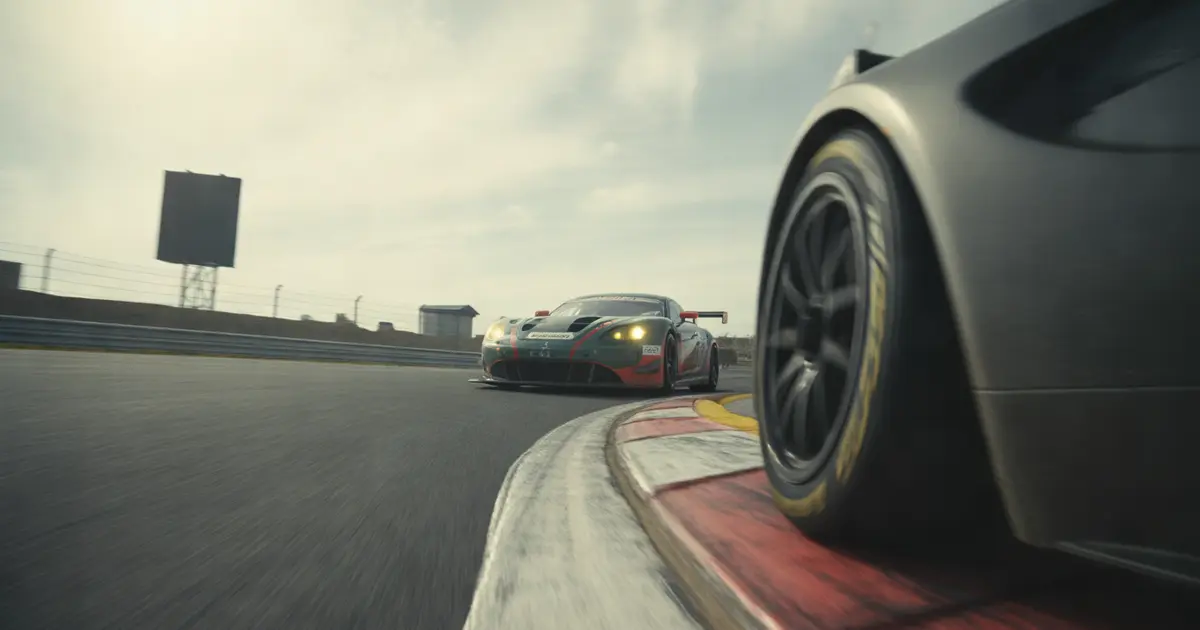
The car pushes mid-corner, you correct the wheel and lose the apex. Here's how to confirm in the data if turning in too early is the problem.
Turning the wheel too early means pointing the car toward the apex before you finish releasing the brake. The result is mid-corner understeer: the car doesn't tighten the radius you asked for, and you have to correct the wheel to finish the turn. You can confirm this by comparing the steering angle channel with the brake channel in the same corner, lap after lap.
The symptom is easy to feel, but easy to confuse with other causes. That's why the diagnosis needs to come from the data, not just the feeling.
What You Feel When You Turn In Early
- The car pushes mid-corner even with the brake already released, as if the front axle doesn't respond to the extra steering input.
- You correct the wheel twice in the same corner: turn, feel the push, turn again to tighten the radius.
- The apex arrives late because the car travels a wider radius than planned before accepting the corner.
- The exit is compromised because you already have more steering angle than you needed by the time you get to throttle.
How to Confirm It in the Data
Open the steering angle channel overlaid with brake pressure and speed, in the same corner, comparing your reference lap with a slower one. If the steering angle rises sharply while brake pressure is still high, that's the signature of turning in early.
The healthy pattern is the opposite: the steering angle builds up more smoothly as the brake is released, in an almost proportional curve. This relationship between releasing the brake and adding steering is the core of well-executed trail braking.
Don't Confuse It With Other Problems
Mid-corner understeer has more than one possible cause, and treating the wrong one fixes nothing.
| Symptom in the car | Most likely cause |
|---|---|
| Pushes as soon as you turn in, with the brake still heavy | Turned in early, front tire still loaded from braking |
| Pushes only near the apex, brake already released | Excess entry speed |
| Pushes on exit, when accelerating | Late turn-in compensated with a large steering angle on traction |
If the telemetry pattern shows high steering angle with the brake still applied, it's an early turn-in. If the brake was already at zero before the steering peak, the problem is something else: most likely entry speed, not the turn-in point.
Why This Changes by Car and by Track
A car with a lot of downforce tolerates a slightly early turn-in better, because the aerodynamic load holds the front end even with the brake still active. In a lighter car or one with less aero, the same mistake shows up earlier and stronger, because the front tire depends almost entirely on the mechanical load from braking.
Long, constant-radius corners hide the mistake, because there's time to correct without losing much. Decreasing-radius corners or corners with a late apex punish early turn-in clearly: the car points at a radius that no longer exists in the second half of the corner.
How to Train the Correction
- Pick a reference corner where the symptom shows up often, preferably a decreasing-radius one.
- Mark the braking point and watch when the steering starts to rise relative to brake pressure, using the lap overlay.
- Delay the start of the turn-in in small increments, without changing the braking point, and repeat for a few laps.
- Compare the steering channel between laps until you find the curve that rises more smoothly and without a second peak.
- Confirm it in the sector time whether the change actually helped, because a feeling of a more stable car doesn't always turn into time.
Turning in early isn't a hand error, it's a sequencing error: the steering arrived before the brake finished its job.
When the Correction Doesn't Work
If you've already delayed the turn-in and the car still pushes mid-corner, the problem might not be technique anymore. A front tire already worn from the session, tire pressure out of range, or a setup with little front grip on entry all produce the same symptom even with the correct turn-in point.
In that case it's worth checking whether the front tire isn't being destroyed too early in the session, because a worn tire mimics understeer even with the right technique. It's also worth reviewing whether the delay in closing the corner is actually time lost in the rotation phase and not in the braking itself.
Where Laptics Comes In
Laptics' corner-phase analysis automatically shows the steering channel overlaid with the brake channel, comparing your lap with a reference. This takes the diagnosis out of guesswork and shows exactly which corner the turn-in is arriving too early, without having to build the overlay manually every time.
Practical Summary
Turning in too early shows up in the data as steering angle rising while the brake is still pressed. Separate this symptom from excess speed by comparing the exact point where the brake hits zero and the steering starts to climb. Then, test delaying the turn-in in small steps and validate it in the sector time, not just in the feeling.
Frequently asked questions
Does turning the wheel early always cause understeer?
In most cars, yes, because the front tire is still busy with braking and has less grip left over for steering. In cars with a lot of downforce, the effect can be smaller at high speed.
How do I tell early turn-in apart from excess entry speed?
Look at whether the steering peak happens while the brake is still applied or already at zero. Brake still active indicates early turn-in; brake already released indicates entry that's too fast.
Does delaying the turn-in always improve lap time?
Not necessarily. It depends on the car, the tire, and the corner. You need to validate it in the sector time, not just in the feeling of a more stable car.
What kind of corners show this mistake the most?
Decreasing-radius corners or corners with a late apex expose the mistake more, because the car points at a radius that stops existing in the second half of the corner.
Can a worn tire mimic the symptom of turning in early?
Yes. A worn front tire reduces grip and produces the same mid-corner push even with the correct turn-in point.
Which telemetry channel should I look at first for this diagnosis?
Steering angle overlaid with brake pressure, in the same corner, comparing different laps.
Does Laptics fix this automatically for me?
No. Laptics shows where and how much the early turn-in costs you time in your lap; the technique adjustment is still up to you.
Want to see this in your own telemetry?
I want to see my corner entry in the data