%20--%3e%3cdefs%3e%3cstyle%3e%20.st0%20{%20fill:%20%23ff1230;%20}%20.st1%20{%20fill:%20%23fff;%20}%20%3c/style%3e%3c/defs%3e%3cpath%20class='st0'%20d='M49.77,34.93l3.47-5.3,23.2-5.86,4.03-6.07-23.14,5.83,3.55-5.33,23.17-5.84,3.96-6.05-23.07,5.8,3.59-5.52-23.16,5.83,3.68-5.68-19.8,4.98c-2.49.63-4.65,2.16-6.07,4.3l-1.81,2.75,20-5.03c.7-.18,1.49-.1,1.75.21.21.25.09,1.12-.24,1.61l-1.85,2.7-19.34,4.87c-2.48.62-4.64,2.15-6.06,4.29l-1.82,2.75,20.12-5.04c.7-.18,1.53.11,1.64.48.09.31-.06,1.12-.4,1.6l-1.79,2.51-19.21,4.82c-2.51.63-4.69,2.19-6.11,4.36l-1.75,2.69,20.19-5.08c1.67-.25,1.96.77,1.1,2.08l-1.9,2.89,19.51-4.94c1.49-.38,2.88,0,1.87,1.62l-1.88,3.01,24.65-6.19,3.01-5.82-23.07,5.79ZM60.94,13.54c.53-.13,1.35.11,1.52.37.19.28-.02,1.14-.37,1.66l-1.73,2.56-22.57,5.67,3.51-5.31,19.64-4.95ZM30.19,35.24l3.49-5.33,19.75-4.95c1.34-.34,1.92.7,1.23,1.76l-1.83,2.83-22.65,5.7Z'/%3e%3cpath%20class='st1'%20d='M236.44,40.24l22.56-33.95h10.5l-22.56,33.95h-10.5Z'/%3e%3cpath%20class='st1'%20d='M368.54,15.18l5.9-8.88h-52.48l-5.64,8.49-3.45,5.19-5.01,7.54h0s40.4,0,40.4,0l-2.82,4.24h-72.13c-2.23,0-3.07-1.46-1.87-3.27l9.11-13.71h29.5l5.95-8.49h-40.31l-5.64,8.49-9.61,14.46c-.36.55-.67,1.08-.92,1.61-.15.31-.28.61-.39.9-1.52,4.06.3,7.25,4.69,8.2.48.1.99.18,1.54.23.44.04.9.06,1.38.06h85.14l8.46-12.73,5.24-7.89h-40.45l2.95-4.44h40.45Z'/%3e%3cpath%20class='st1'%20d='M198.16,6.32c-.19,0-.37-.03-.56-.03h-60.45l-37.03,26.63h-19.71l18.01-26.63h-10.5l-17.48,26.31c-2.17,3.27.17,7.64,4.09,7.64h28.01l37.22-25.46h6.27l-16.92,25.46h10.51l16.92-25.46h27.83l-.02.04h7.11c1.89.18,2.56,1.55,1.44,3.23l-1.3,1.96c-1.2,1.8-3.98,3.27-6.21,3.27h-25.26l-11.28,16.98h10.5l5.64-8.49h15.69c.48,0,.96-.02,1.45-.06.61-.05,1.22-.12,1.84-.23,5.65-.95,11.72-4.14,15.59-8.2.02-.02.04-.04.06-.06.74-.78,5.18-7.47,5.57-8.39h17.48l-16.94,25.49h10.51l16.94-25.49h14.98l5.65-8.5h-55.64Z'/%3e%3c/svg%3e)
Historic Interlagos in Automobilista 2: the old layout and what it demands from drivers
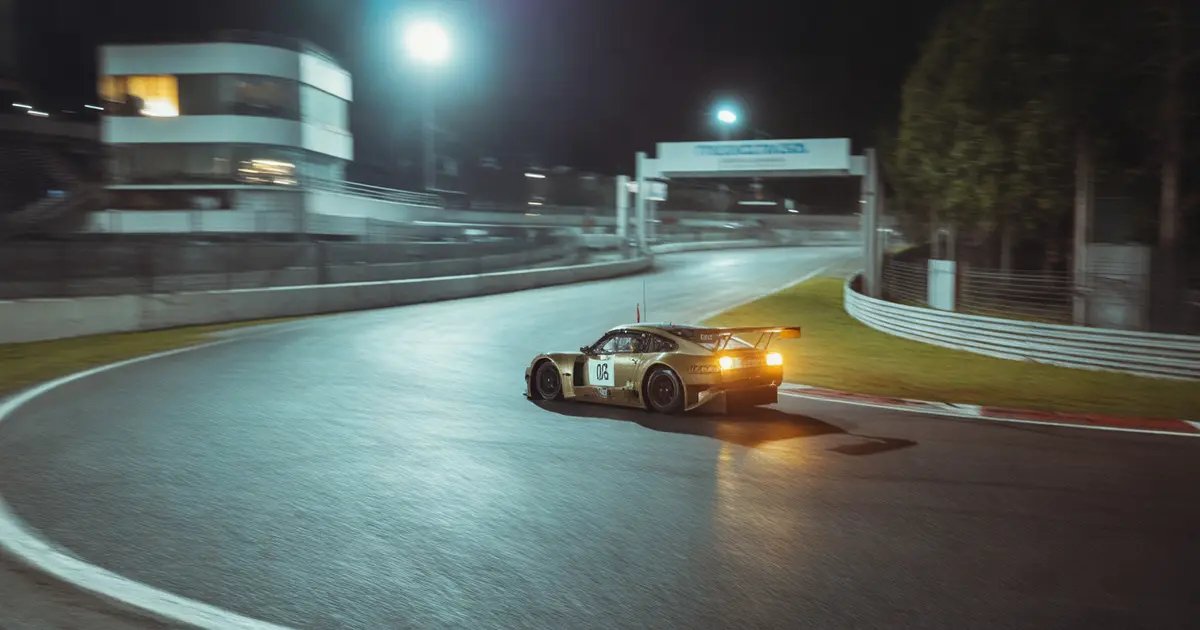
The historic Interlagos layout in Automobilista 2 demands more precision: fewer chicanes, a narrower track and faster corners. See what changes in pace, setup and practice.
The historic Interlagos layout in Automobilista 2 demands more from the driver because it leaves less room for error: wider-radius corners taken at higher speed, a narrower track, and none of the safety chicanes the current layout has. That changes where you gain lap time and where a small mistake turns into an off-track excursion, not just a loss of a few tenths.
Drivers who only run the modern version of Interlagos arrive at this layout with the wrong references. The braking rhythm is different, the margin for error is smaller, and the car spends more time under sustained lateral load. That changes what you should practice before just setting off laps.
What changes compared to the current layout
The difference isn’t just cosmetic. The historic layout has fewer hard-braking points and more sections where the car stays in a corner for longer stretches, without the pause a modern chicane offers to reset your confidence.
| Aspect | Current layout | Historic layout |
|---|---|---|
| Safety chicanes | Present, break up the rhythm | Absent or reduced |
| Average corner radius | Tighter in technical sections | Wider, faster |
| Run-off on a mistake | Larger run-off | Smaller run-off, track limits and grass right there |
Where the historic layout punishes you more
Long-radius corners at high speed
With no chicane to break up the straight, you arrive at these corners with more accumulated energy. The common mistake is entering with the same braking reference from the modern layout and having too much car left in the first phase of the corner.
Sections with no breathing room
On the historic layout, the car spends more time with the tyre loaded on just one side. That demands a fine reading from the driver of exactly when the tyre starts to give, because there isn’t a short straight right after it for the tyre to “breathe”.
Setup: what changes for this layout
- A slightly lower rear wing helps reduce drag in the high-speed sections the historic layout has more of, as long as the rear end can still handle the fast corners without stepping out.
- A softer front anti-roll bar gives more predictability on corner entry for the long-radius turns, where you need confidence to keep your foot on the throttle before you normally would.
- Revised tyre pressures because the car spends more time under constant lateral load, which changes operating temperature compared to the current layout. It’s worth comparing both versions, as covered in how to adjust tyre pressure by operating temperature.
- Slightly firmer bump damping helps control the car over the bumps on the historic asphalt, which tends to be rougher than the current surface.
Common mistakes and how to spot them in the data
The most frequent mistake is carrying over the setup and braking style from the modern layout without adjusting. That shows up on the graph as late braking in the fast corners and a constant time loss at the same phase, lap after lap.
Another mistake is treating the long-radius corners like normal entry-apex-exit corners. On the historic layout, many of them call for a more continuous line, with less steering correction mid-corner. If the steering channel shows repeated micro-corrections in that section, it’s a sign your confidence on entry is low.
On the historic layout, lap time isn’t hidden in the braking zone. It’s in how long you can keep the car loaded without correcting.
How to practice this tomorrow
- Set aside a session just for the fast corners. Go in and out several times in a row, without worrying about the whole lap, until you feel where the car starts warning you it’s about to let go.
- Compare your line with the one on the current layout. If you keep the same braking point on both versions, you’re probably getting it wrong on one of them.
- Monitor the steering channel in the replay or telemetry. Lots of mid-corner correction is a sign you’re entering too fast for the confidence you have there.
- Adjust the setup before adjusting your style. An unstable car on entry to the fast corners tricks the driver into braking earlier than necessary.
How to confirm the gain in the data
After adjusting setup and line, the way to confirm it is to compare the same corner, lap after lap, looking at minimum speed and the throttle pickup point. If minimum speed goes up without the pickup point getting later, the change worked. If both get worse together, the problem is back in the setup.
It’s worth remembering that grip at Interlagos changes throughout the session, historic or not. That’s already covered in how the track gains grip session after session, and on the old layout the effect is more noticeable because the track gets less constant use than the current one.
Where Laptics comes in
Laptics automatically records telemetry while you drive and compares your laps corner phase by corner phase. For the historic layout, that helps you see exactly which long-radius corner you’re losing time in due to steering correction, without having to guess from watching the replay.
The Driver DNA also shows whether the late-braking pattern you use on the current layout is being repeated here, even when the layout calls for something different. It’s a starting point for adjustment, not a ready-made setup or an automatic fix.
Practical summary
The historic Interlagos layout punishes the wrong reference faster than the current one: less run-off, faster corners, tyre loaded for longer. Adjust the setup before adjusting your style, practice the fast corners in isolation, and confirm the gain by checking minimum speed and the throttle pickup point, corner by corner. Drivers who already master the Senna S on the modern layout and the Descida do Lago braking zone in GT3 have a good base, but need to recalibrate their confidence in the historic layout’s fast corners before chasing lap time.
Frequently asked questions
Is the historic Interlagos layout faster than the current one?
It depends on the car and the exact setup, but in general the historic layout has higher-speed sections since it has fewer chicanes breaking up the rhythm.
Do I need a different setup for the historic layout?
Yes, at least in terms of wing, anti-roll bar and tyre pressure, because the car spends more time under constant lateral load.
Why do I lock the front wheel more on the historic layout?
Usually because the braking reference you use on the current layout doesn't work here; it's worth reviewing your braking point corner by corner, as covered in how locking the front wheel costs you more time.
Does Reiza's tyre model behave differently on this layout?
The model is the same, but since the car stays loaded laterally for longer, wear and operating temperature show up more noticeably.
Is it worth practicing the historic layout if I only race the current one in a league?
Yes, as confidence training for fast corners, even if you don't race the historic layout often, because it exposes line mistakes the current layout hides.
How do I know if I'm losing time on entry or in the corner itself?
By looking at the steering channel: repeated corrections mid-corner indicate you're entering too fast for the confidence you have there.
Want to see this in your own telemetry?
Analyze my laps at Interlagos